Making Every Dollar Perform: The Real Financial Architecture Behind a Community Theater Production
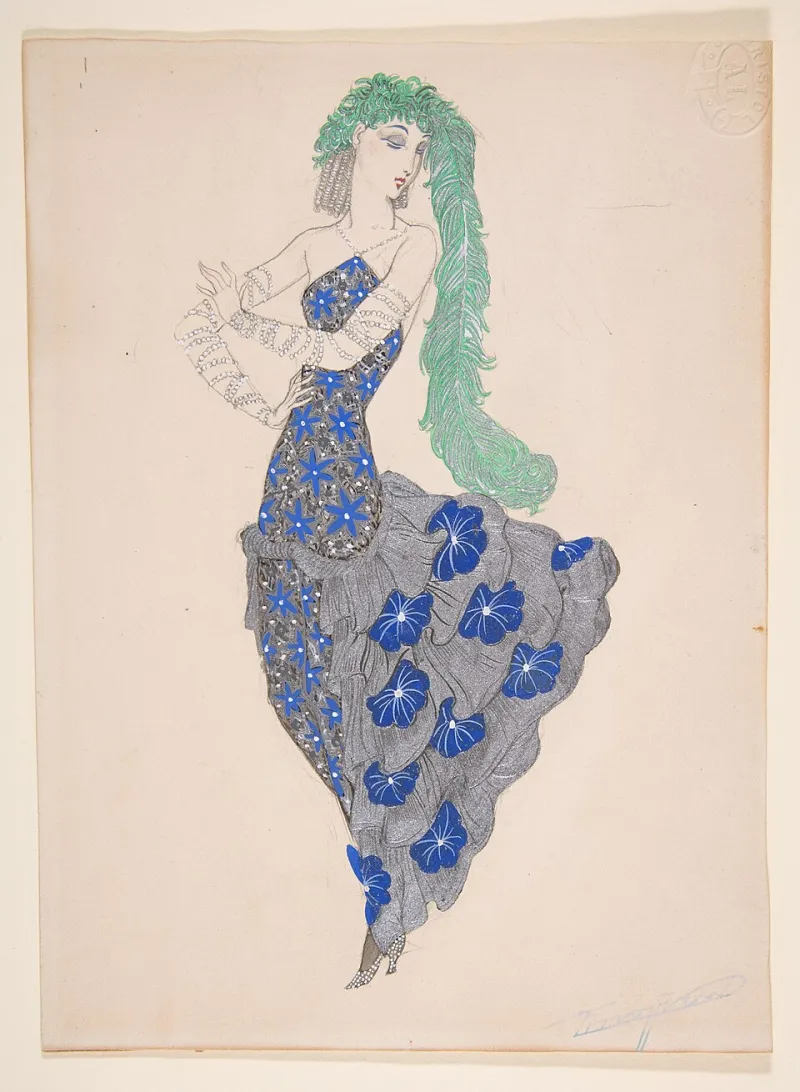
Photo: AnonymousUnknown author, CC0, via Wikimedia Commons
The audience sees a Victorian drawing room, complete with period-accurate wallpaper, gas-lamp sconces, and a chaise longue upholstered in deep burgundy velvet. What the audience does not see is that the wallpaper was printed at a local copy shop for thirty-two dollars, the sconces were found at an estate sale and rewired by a volunteer electrician, and the chaise longue was purchased from a thrift store, reupholstered by a company member with a sewing background, and stored in the director's garage between productions.
This is community theater economics in its most elegant form: the art of creating the impression of abundance through the disciplined application of ingenuity.
For audiences, the magic is the point. For practitioners, the magic is the mechanism—the elaborate system of resourcefulness, community partnership, and creative problem-solving that makes a production look like it costs far more than it does. Understanding that mechanism is essential for anyone involved in, or interested in, the actual practice of community theater production.
The Budget Anatomy of a Typical Production
Community theater production budgets vary widely depending on the size of the company, the scale of the production, and the resources available in a given community. A small company mounting a two-character drama in a black-box space might operate with a production budget of two to five thousand dollars. A mid-sized company staging a full musical with a cast of twenty could be working with fifteen to forty thousand dollars or more.
Within those budgets, expenditures typically fall into three primary categories: scenic and set design, costume and wardrobe, and lighting and sound. Each presents its own distinctive challenges and opportunities for resourceful management.
Scenic budgets in community theater are frequently the most elastic, because physical set construction is an area where volunteer labor and donated materials can have an enormous impact. A set that would cost a professional scenic shop ten thousand dollars to build can often be constructed by a skilled volunteer crew for two to three thousand in materials alone—provided the company has access to the right people, the right tools, and adequate lead time.
"The single biggest variable in our scenic budget is not materials," said one production manager with fifteen years of community theater experience. "It's time. Given enough lead time, we can find almost anything we need through donations, loans, or creative fabrication. When we're rushed, we pay retail, and that's when budgets break."
Costume Design on a Constrained Budget
Costume design occupies a peculiar position in community theater economics. It is simultaneously one of the most visible elements of a production—audiences register clothing immediately and unconsciously as a signal of period, character, and social status—and one of the areas where resourceful designers have developed the most sophisticated strategies for achieving professional results inexpensively.
The community theater costume ecosystem runs on a combination of rental agreements with other companies, thrift store acquisition, alteration of existing pieces, and selective construction of items that cannot be sourced any other way. Experienced costume designers approach each production with a clear hierarchy: what can be rented, what can be found, what can be modified, and what must be built from scratch.
Rental relationships between community theater companies are particularly valuable and, in many regions, represent a genuine form of artistic infrastructure. A company that has accumulated a strong period costume inventory over decades of production will frequently rent pieces to neighboring companies at rates well below commercial costume houses, creating a mutual support network that benefits the entire regional theater community.
"I always tell new costume designers to think of thrift stores as their primary fabric source, not their last resort," noted one veteran community theater costumer. "A fifty-dollar blazer from a thrift store, properly altered and accessorized, reads from the third row exactly like a three-hundred-dollar blazer. The audience is not examining your seams."
For productions requiring specialized period or character costumes that cannot be sourced through conventional channels, construction becomes necessary. Even here, cost management strategies abound. Community theater costumers frequently work with local fabric stores to negotiate discounts in exchange for program acknowledgment, source materials from online surplus retailers, and organize construction workdays that function as social events—drawing in volunteers who enjoy the craft without necessarily having formal training.
Lighting Design: The Most Invisible Investment
Of all the production design disciplines, lighting is perhaps the least understood by general audiences and the most consequential for the quality of what they experience. It is also an area where community theater companies frequently face their most significant capital constraints.
A professional lighting rig—the combination of fixtures, dimmers, control boards, and cable infrastructure that allows a lighting designer to shape the visual environment of a production—represents a substantial capital investment. For companies that own their theater spaces, building and maintaining a quality lighting infrastructure is a long-term financial commitment that must be managed strategically over many years.
For companies that rent their performance spaces, the situation is more complicated. Venue lighting systems vary enormously in quality and flexibility, and a lighting designer accustomed to working in one space may find themselves dramatically constrained when moving to another.
The most practically significant development in community theater lighting over the past decade has been the widespread adoption of LED fixtures. LED technology has dramatically reduced both the initial cost of quality theatrical lighting equipment and the ongoing operational cost of running a lighting system. LED fixtures consume a fraction of the electricity of their incandescent predecessors, generate significantly less heat, and have lifespans that reduce maintenance requirements considerably.
"Five years ago, a full LED retrofit felt like a luxury," said one community theater technical director. "Now it's almost always the financially responsible choice when you run the numbers over a three-year horizon."
The Partnership Economy
Perhaps the most underappreciated resource available to community theater production teams is the local business community. Companies that have invested in building genuine relationships with local businesses—not merely soliciting sponsorships, but creating authentic partnerships based on mutual benefit—frequently discover that in-kind support can dramatically extend their production budgets.
Local lumber yards, fabric stores, hardware suppliers, and paint retailers are often willing to provide materials at reduced cost or as donations in exchange for program credit, promotional acknowledgment, and the genuine community goodwill that comes from supporting a visible local cultural institution. Furniture rental companies, florists, and antique dealers have been known to loan production pieces in exchange for acknowledgment. Local culinary programs have contributed props and set dressing.
These relationships require cultivation and maintenance—they are built over years, not secured through a single phone call. But for companies that invest in them, they represent a form of community capital that is genuinely irreplaceable.
The True Cost of Excellence
Community theater production is, at its core, an act of collective creative problem-solving. The constraints are real, the resources are finite, and the results—when the work is done with skill and commitment—can be genuinely extraordinary.
What the audience sees on opening night is not simply the product of a budget. It is the product of dozens of individuals contributing expertise, labor, materials, and imagination toward a shared creative goal. The Victorian drawing room cost thirty-two dollars in wallpaper and hundreds of hours of volunteer effort. Both are true. And both are, in their own way, the story of why community theater endures.

