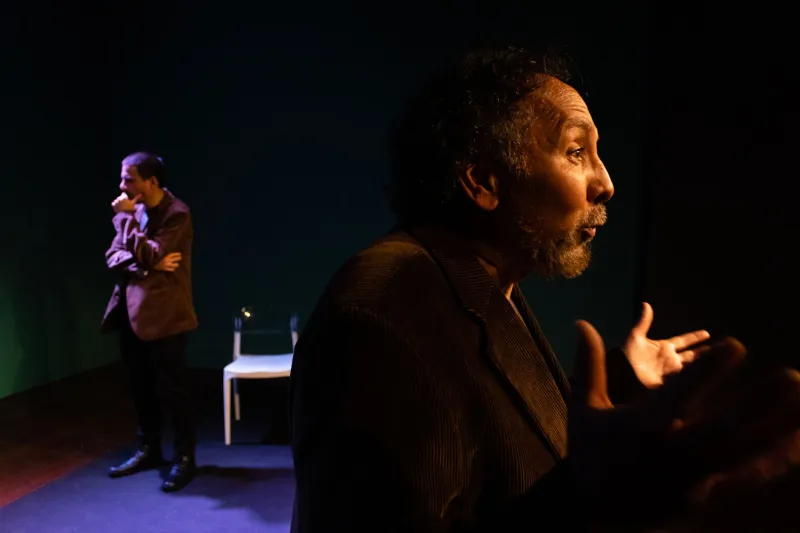
Behind the Curtain: The Art and Alchemy of the Theater Director
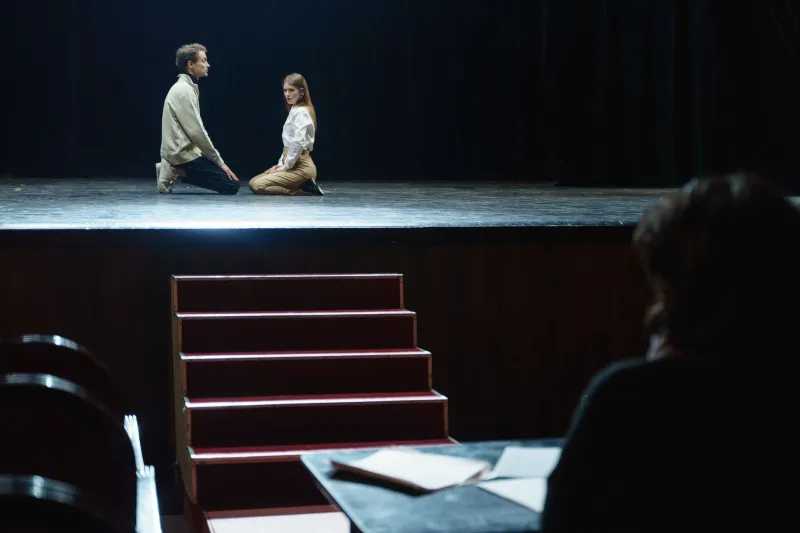
The audience rarely applauds for the director. There is no curtain call, no spotlight, no bouquet of flowers handed across the footlights. And yet, in the truest sense, everything the audience experiences—the emotional architecture of a scene, the rhythm of a conversation, the way a single gesture can shatter a heart—originates in the vision of one person: the director.
At Epic Theatre Center, we believe that understanding what happens behind the scenes enriches every moment spent watching a live performance. Whether you are an aspiring director yourself, a dedicated theatergoer, or simply someone curious about how a script transforms into a living event, the director's process is one of the most fascinating creative journeys in all of the performing arts.
The First Encounter: Reading Between the Lines
For most directors, the process begins long before a single actor enters the rehearsal room. It begins with solitude and a script.
"I read a new script at least four times before I speak to anyone about it," explains Marcus Delray, artistic director of a regional repertory company in the Pacific Northwest. "The first read is purely emotional—I let the story wash over me. The second is analytical. By the third and fourth, I'm beginning to hear the production in my head. I'm seeing the space, feeling the silences."
This initial period of deep textual engagement is not merely academic. Directors must identify the play's central question—the moral, emotional, or philosophical tension that gives the work its reason to exist. Without that anchor, every subsequent decision risks becoming arbitrary.
For community theater directors, this interpretive process carries additional weight. They are often working with volunteer casts, limited budgets, and audiences who may not have extensive theater experience. The responsibility to make the work accessible without diminishing its complexity is a constant balancing act.
"I always ask myself: what does this story mean to the people in my community right now?" says Renata Osei, who has directed productions for a community theater organization in the Atlanta metropolitan area for over a decade. "A play written in 1950 can speak directly to something people in my neighborhood are living through today. My job is to find that thread and pull it through every single scene."
The Rehearsal Room: A Laboratory of Human Behavior
If the director's private reading process is contemplative, the rehearsal room is anything but. It is a laboratory—sometimes exhilarating, sometimes frustrating—where ideas meet the stubborn reality of human beings.
Directors must simultaneously serve as interpreter, psychologist, collaborator, and decision-maker. They communicate with actors about intention and motivation while also tracking the visual composition of every moment on stage. They listen to what a scene designer proposes and translate that conversation back into emotional terms the cast can inhabit.
"People imagine the director standing at a table, issuing commands," says Delray. "The reality is that I spend most of my time listening. Listening to actors, listening to the room, listening to what the play is trying to tell me that I haven't understood yet."
This listening extends to the actors' instincts. Experienced directors understand that their pre-production vision is not a blueprint to be executed but a hypothesis to be tested. When an actor discovers something unexpected in a scene—a vulnerability, a comedic impulse, a moment of stillness that reframes everything around it—the skilled director recognizes it and builds upon it.
"Some of my best directorial decisions have been to get out of the way," Osei reflects. "When an actor finds something true, your job is to protect it, not redirect it toward what you originally imagined."
The Invisible Architecture: Rhythm, Space, and Silence
Among the director's most consequential—and least visible—responsibilities is the management of theatrical rhythm. Audiences feel rhythm even when they cannot name it. A scene that moves too quickly denies emotional resonance; one that lingers too long loses momentum. The director calibrates this with almost musical precision.
Equally important is the use of stage space. Where an actor stands, how they move, whether they face toward or away from another character—these spatial relationships communicate meaning that dialogue alone cannot convey. Directors study this visual language with the same rigor that a novelist applies to sentence construction.
And then there is silence. In live theater, a well-placed pause can be more powerful than the most eloquent speech. Directors learn to trust silence, to allow it to breathe, to resist the urge to fill every moment with action or sound.
"Silence is where the audience does their own work," Delray observes. "It's where they feel something privately. If you respect silence, you respect the audience."
Collaboration as Creative Philosophy
The modern theater director does not work in isolation. They are the hub of a vast creative collaboration that includes scenic designers, costume designers, lighting and sound technicians, stage managers, choreographers, and musical directors. Each of these collaborators brings expertise the director may not possess, and the ability to synthesize their contributions into a coherent whole is itself a sophisticated skill.
For community theater directors, this collaboration often extends into unexpected territory. Volunteers may be designing their first set or managing their first production. The director frequently becomes a mentor, educator, and creative catalyst all at once—a role that demands patience, clarity, and genuine generosity of spirit.
"Community theater is where theater lives closest to the ground," says Osei. "The people involved aren't doing it for a paycheck. They're doing it because it matters to them. That kind of commitment is humbling, and it pushes me to be a better director."
What Aspiring Directors Should Know
For those who feel drawn to the director's chair, seasoned practitioners offer consistent counsel: study everything, not just theater. Literature, painting, music, architecture, psychology, history—all of it feeds the directorial imagination. Attend as many productions as possible, not merely as an audience member but as a student of craft. Ask why every choice was made.
Assisting an experienced director is widely considered the most valuable form of apprenticeship. Observing how another practitioner navigates the rehearsal room, manages creative conflict, and makes decisions under pressure is an education that no classroom can fully replicate.
Perhaps most importantly, aspiring directors should direct—early, often, and without waiting for ideal conditions. A staged reading in a church basement, a short play festival at a local arts center, a student production with borrowed furniture and borrowed costumes: these are the crucibles in which directorial instinct is forged.
"You learn to direct by directing," Delray says simply. "And you learn to direct better by watching what didn't work and asking yourself why."
The Enduring Reward
Opening night, for a director, carries a particular quality of emotion that is difficult to describe. The production no longer belongs to them. It belongs to the actors, the audience, and the living moment of performance. The director sits in the house—often anonymously—and watches the work breathe on its own for the first time.
"There's a kind of letting go that happens," Osei says. "And if you've done your work honestly, what you feel isn't loss. It's something closer to gratitude."
At Epic Theatre Center, we celebrate that gratitude—and the extraordinary invisible labor that makes it possible. The next time you take your seat in a darkened theater, consider for a moment the person whose vision shaped every detail of what you are about to witness. The director may never take a bow, but the stage itself is their signature.