The Invisible Architects: How Lighting, Sound, and Stagecraft Shape Every Moment You Experience in the Theater
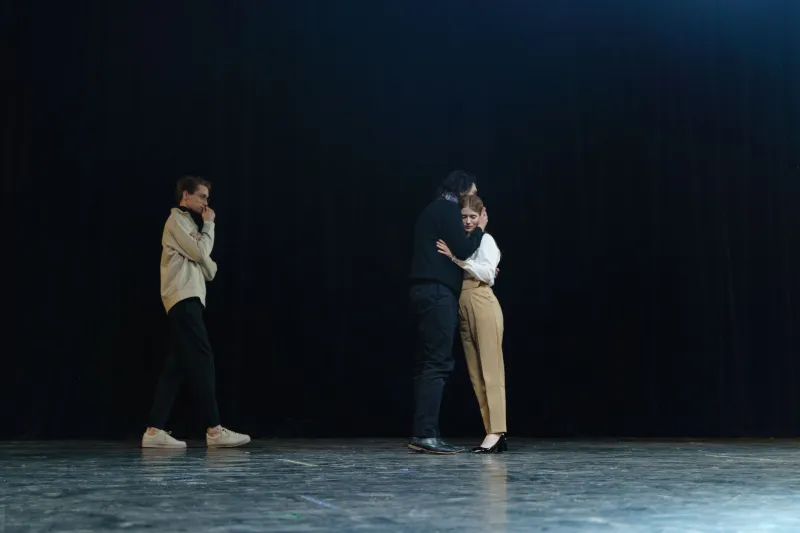
There is a moment—familiar to anyone who has sat in a darkened theater—when the house lights dim and a single spotlight finds its mark on an otherwise bare stage. In that instant, before a word is uttered or a note is played, something profound has already occurred. An emotion has been suggested. A world has been implied. A story has begun.
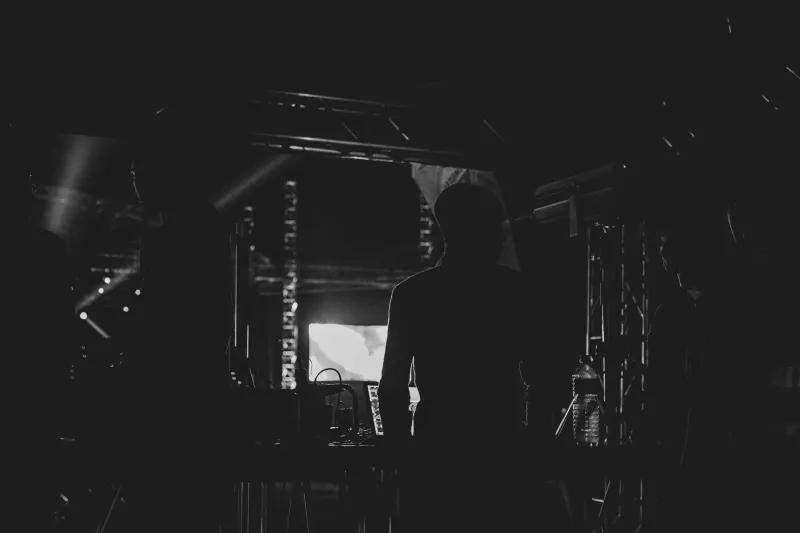
What most audience members do not realize is that this moment did not happen by accident. It was engineered, debated, rehearsed, and refined by a team of technical theater professionals whose names appear in small print at the back of the program—if they appear at all. These are the lighting designers, sound engineers, scenic artists, and stage technicians who quietly construct the emotional architecture of every live performance. They are, in every meaningful sense, the invisible architects of the theatrical experience.
More Than Switches and Speakers
The popular imagination tends to reduce technical theater to a matter of flipping switches and adjusting volume levels. The reality is considerably more sophisticated. A professional lighting designer, for instance, must possess a working knowledge of color theory, human psychology, spatial geometry, and electrical engineering—all while maintaining a nuanced sensitivity to the emotional demands of a script.
"Every choice we make with light tells the audience how to feel," explains Marcus Delray, a lighting designer who has worked with regional theater companies across the Midwest and now volunteers his expertise with a community theater in Columbus, Ohio. "The angle of a single source can make a character look heroic or sinister. The temperature of the color—whether it leans warm or cool—can shift the mood of an entire scene without the audience ever consciously noticing. That invisibility is the goal. When lighting is working perfectly, you don't see it. You just feel it."
Sound design operates under a similarly demanding set of artistic and technical constraints. The task is not merely to amplify voices or cue music at appropriate intervals. It involves constructing an entire sonic environment—one that supports the narrative, locates the audience in a specific time and place, and guides emotional response with remarkable precision. The crack of thunder at exactly the right dramatic moment, the barely perceptible underscore that swells beneath a critical monologue, the careful calibration of acoustic space so that every seat in the house receives a balanced and immersive experience—each of these represents hours of deliberate creative work.
Stagecraft as Storytelling
Perhaps no element of technical theater is more immediately visible—and yet more frequently underestimated—than scenic design and construction. A well-built set is not merely a backdrop. It is a physical argument about the world the characters inhabit. The height of ceilings, the texture of walls, the degree to which a space feels confining or expansive—all of these choices communicate meaning before a single performer steps into frame.
Sandra Okafor, a scenic artist and carpenter who has contributed to productions at community theaters in the Atlanta metropolitan area, describes her work as a form of collaborative storytelling. "I read the script the same way a director does," she says. "I'm looking for what the physical environment needs to say. Sometimes a play needs a set that feels oppressively real—every detail naturalistic and grounded. Other times, the story demands something more abstract, something that gives the audience's imagination room to participate. The material choices, the construction methods, the paint techniques—they all serve the story."
This approach requires a remarkable breadth of skills. Scenic artists must be proficient in carpentry, welding, painting, and structural engineering. They must understand perspective and forced scale. They must be capable of building sets that are simultaneously visually compelling, structurally sound, and practical for actors who will move through them eight times a week.
Community Theater as a Training Ground
One of the most significant—and least celebrated—contributions of community theater in the United States is its role as a genuine training ground for technical theater professionals. In an era when formal education in theatrical technology can carry a substantial financial burden, community theater programs offer aspiring technicians hands-on experience that rivals, and in some respects exceeds, what can be learned in a classroom.
The constraints inherent to community theater—limited budgets, modest equipment inventories, compressed production timelines—demand a level of creative problem-solving that produces remarkably capable practitioners. A young technician who has learned to create a convincing thunderstorm effect with a modest lighting rig and a consumer-grade sound system has developed a resourcefulness that no amount of well-funded training can fully replicate.
"Community theater taught me to think," says Jordan Whitfield, who began volunteering as a stagehand at a community theater in Phoenix at the age of sixteen and has since built a career in live event production. "When you don't have the expensive tool or the ideal piece of gear, you have to find another way. That problem-solving instinct is what separates good technicians from great ones, and I developed it entirely through community theater."
Many community theaters have begun formalizing this educational function, establishing apprenticeship programs, youth technical theater workshops, and mentorship relationships that connect experienced professionals with newer practitioners. These initiatives are expanding access to theatrical technology careers in communities where formal training programs have historically been scarce.
The Collaborative Imperative
What distinguishes technical theater from many other technical disciplines is the degree to which it demands genuine artistic collaboration. A lighting designer does not simply execute a director's instructions—they engage in an ongoing creative dialogue, proposing solutions, challenging assumptions, and contributing an independent artistic perspective to the work. The same is true of sound designers and scenic artists. The best productions emerge from a genuine ensemble of creative voices, technical and performative alike.
This collaborative dimension makes technical theater an unusually rich entry point into the broader world of dramatic arts. Those who come to the theater through its technical dimensions often develop a comprehensive understanding of performance, dramaturgy, and directorial vision that enriches their work in ways that purely technical training cannot provide.
An Invitation to Look Closer
For audiences, developing an awareness of technical theater transforms the experience of live performance. The next time you find yourself moved by a scene, consider pausing to ask what specific technical choices contributed to that response. Was it the quality of light on the actor's face? The precise timing of a sound cue? The way the set design focused your attention on a particular spatial relationship between characters?
These are not incidental details. They are the product of deliberate artistic labor—labor performed by skilled professionals who have dedicated themselves to an art form that demands both technical mastery and genuine creative vision.
At Epic Theatre Center, we believe that understanding the full scope of theatrical craft deepens the relationship between audiences and the art form they love. The stage comes alive not through the efforts of performers alone, but through the collective vision of every artist—visible and invisible—who contributes to the work. The invisible architects deserve to be seen.