When the Curtain Rises on Healing: The Profound Psychological Power of Community Theater
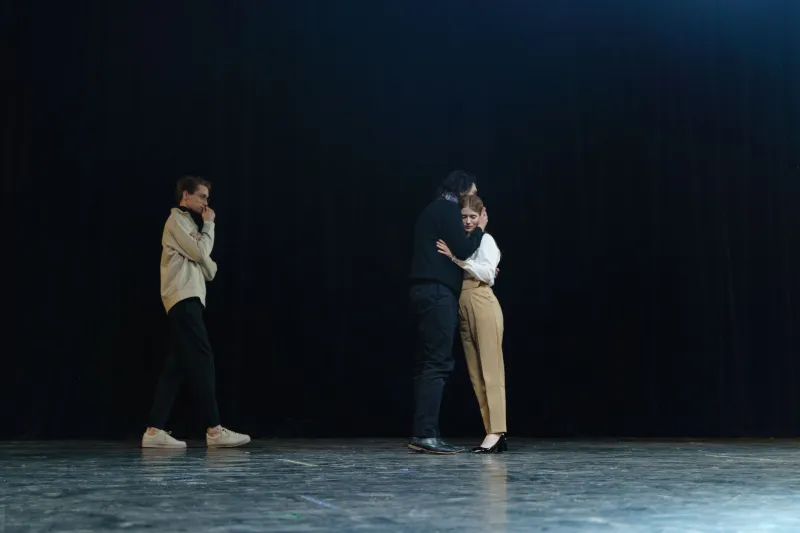
There is a particular moment that many nonprofessional actors describe with striking consistency. It happens somewhere between the first read-through and opening night—a quiet, almost imperceptible shift in which they stop reciting lines and begin, in some essential way, to live them. For a growing number of community theater participants across the United States, that shift carries consequences that extend far beyond the stage. It reaches into the texture of daily life, altering how they understand themselves, relate to others, and navigate the weight of their own emotional histories.
What researchers, therapists, and theater practitioners are increasingly recognizing is that this transformation is not accidental. It is the product of deeply human psychological mechanisms that dramatic performance uniquely activates.
The Science Behind the Stage
Neuroscientists have long studied the brain's remarkable capacity for what is known as narrative transportation—the cognitive and emotional process by which human beings immerse themselves in stories. When an actor inhabits a character, that process intensifies significantly. Studies in embodied cognition suggest that physically enacting emotional states, rather than merely observing or reading about them, engages the brain's limbic system in ways that can recalibrate emotional responses over time.
Dr. Daisy Fancourt, a researcher at University College London whose work has examined the health effects of arts participation, has noted that regular engagement with performing arts is associated with measurable reductions in cortisol—the body's primary stress hormone. Community theater, with its structured rehearsal schedule, collaborative ensemble dynamic, and culminating public performance, appears to deliver these benefits in concentrated form.
Perhaps more remarkably, the act of portraying a character who experiences fear, grief, or conflict provides actors with a form of emotional rehearsal. By processing intense feelings through the protective frame of fiction, participants can approach difficult internal terrain that might otherwise remain inaccessible.
Anxiety's Unlikely Antidote
For those living with social anxiety—a condition affecting an estimated 15 million American adults—the prospect of standing before a live audience would seem to represent the very opposite of therapy. Yet practitioners and participants report a counterintuitive truth: the structured exposure that community theater demands, combined with the psychological shelter of a character's identity, can gradually dismantle the architecture of social fear.
Consider the experience of participants in community theater programs affiliated with nonprofits and civic organizations throughout cities like Chicago, Atlanta, and Portland. Many arrive at their first audition describing themselves as profoundly introverted, convinced that performance is for other people. Within weeks of rehearsal, they frequently report something unexpected—not the absence of nervousness, but a growing capacity to act through it.
The distinction matters. Anxiety management through theater does not work by eliminating discomfort. Instead, it builds what psychologists call distress tolerance: the ability to remain functional and present even when emotional intensity rises. Each rehearsal becomes a controlled environment for practicing exactly that skill.
The Ensemble Effect: Belonging as Medicine
Beyond the individual psychological work of character inhabitation, community theater offers something increasingly rare in modern American life: genuine, sustained human belonging. Loneliness has been declared a public health crisis by the U.S. Surgeon General, with research linking social isolation to outcomes as serious as cardiovascular disease and cognitive decline.
The ensemble structure of theatrical production is, by design, a remedy for isolation. Cast members must learn to trust one another on stage, to listen with unusual attentiveness, and to respond authentically in real time. These are not incidental social courtesies—they are the technical requirements of good theater. But their psychological byproducts are profound.
Participants in community productions frequently describe the rehearsal room as one of the few spaces in their lives where they feel genuinely seen. The collaborative nature of building a show together—arguing over blocking, laughing through fumbled lines, supporting one another through the vulnerability of performance—creates bonds that many describe as among the most meaningful of their adult lives.
For older adults, in particular, community theater has emerged as a powerful buffer against the isolation that often accompanies retirement and age-related life transitions. Programs in senior centers and community arts organizations across the country have documented improvements in participants' reported sense of purpose and social connectedness.
Identity, Voice, and the Permission to Become
There is a quieter form of therapeutic work that community theater performs, one that is harder to measure but no less significant. The act of playing a character who is fundamentally different from oneself—in temperament, background, moral orientation, or life circumstance—invites actors to explore the full range of human possibility from the inside.
For individuals navigating questions of identity, whether related to gender, cultural heritage, or personal values, that exploratory freedom can be genuinely liberating. Theater has historically provided a sanctioned space in which people may try on different ways of being without permanent consequence. In a culture that increasingly demands rigid self-definition, the stage offers a welcome permission to remain fluid, curious, and unresolved.
Young people, in particular, stand to benefit from this dimension of dramatic participation. Adolescents engaged in school and community theater programs have shown greater empathy, improved emotional regulation, and stronger senses of personal agency than their non-participating peers in multiple studies conducted over the past two decades.
What Happens When the Lights Come Up
The psychological benefits of community theater do not evaporate when the final performance ends. Many participants describe lasting changes in how they communicate, how they listen, and how they respond to stress. The skills cultivated in rehearsal—emotional presence, physical expressiveness, collaborative problem-solving—migrate into workplaces, families, and friendships.
This is, perhaps, the most compelling argument for community theater as a form of public health investment. Unlike clinical interventions, which require professional infrastructure and often carry stigma, theater is accessible, joyful, and culturally resonant. It meets people where they already are—in their neighborhoods, their civic organizations, their houses of worship—and it transforms them through the ancient, irreplaceable power of shared story.
At Epic Theatre Center, we believe that the stage belongs to everyone. Not merely as spectators, but as participants—as people willing to step into the light and discover, sometimes for the first time, the full depth of what they are capable of feeling, expressing, and becoming.
The curtain rises for all of us. What happens next is extraordinary.