Breathing New Life Into Old Words: The Art of Reimagining Theater's Greatest Classics
There is a particular kind of courage required to touch a masterpiece. To open a script that has been performed ten thousand times, in ten thousand theaters, across centuries of human experience — and then to ask: What if we changed it? That question, once considered heretical in certain theatrical circles, has become the animating force behind some of the most vital and community-centered productions happening on American stages today.
Community theaters, long regarded as the grassroots foundation of the dramatic arts, are increasingly stepping into the role of creative laboratories. Without the institutional conservatism that can weigh on major regional houses, neighborhood companies are free to experiment — and their audiences are reaping the rewards.
Why Adaptation Is Not Betrayal
The instinct to protect a canonical work is understandable. When a play has endured for decades or centuries, there is a reasonable argument that its original form contains something irreplaceable. Yet that argument, taken too far, transforms living art into artifact.
Dramaturges — the often-unsung scholars and story architects who work alongside directors — are among the most articulate voices in this conversation. Their role is to interrogate a script historically, culturally, and structurally, asking not only what a play says but what it means to a specific audience at a specific moment in time.
"The text is not a museum exhibit," explains one dramaturg working with a mid-sized community theater in the Midwest. "When Chekhov wrote The Cherry Orchard, he was writing about a society in transition — people clinging to a way of life that was already gone. That tension is not historical. It is happening in American communities right now. Our job is to find the bridge."
That bridge-building process is rarely simple. It involves extensive research, community consultation, and a willingness to hold two seemingly contradictory commitments simultaneously: fidelity to the spirit of the original work, and responsiveness to the lived realities of a contemporary audience.
The Craft of the Contemporary Setting
One of the most common — and most visible — tools in the adaptation toolkit is the updated setting. A production of Romeo and Juliet transplanted from Renaissance Verona to a divided American city. A staging of A Doll's House relocated from Victorian Norway to a 1950s American suburb. These shifts are not cosmetic; when executed with intention, they reframe the central conflicts in ways that audiences can feel in their own lives.
Directors who undertake this work describe a rigorous internal process of interrogation. Every change must be justified not by novelty but by meaning. Does moving the setting clarify the play's central argument, or does it obscure it? Does the new context deepen the emotional stakes for the audience, or does it merely provide an interesting visual?
"I always ask myself: what is the play actually about?" says one director whose recent production of an Ibsen classic drew considerable attention for its bold recontextualization. "Not what it's about on the surface — the plot, the characters — but what it's really about. Once you identify that core, you realize how many different vessels it can inhabit."
This philosophy has produced some of the most talked-about community theater productions in recent memory. When the setting resonates with local audiences — when they recognize the landscape, the social dynamics, the specific pressures of their own world — the classical text stops being a school assignment and becomes a mirror.
Inclusive Casting as Interpretive Choice
Perhaps no adaptation strategy has generated more meaningful dialogue — and more genuinely transformative theatrical experiences — than the practice of inclusive casting. The deliberate decision to cast actors of varied racial, ethnic, and gender backgrounds in roles traditionally conceived otherwise is not merely a gesture toward representation. It is, when thoughtfully executed, an interpretive act that can fundamentally alter what a play communicates.
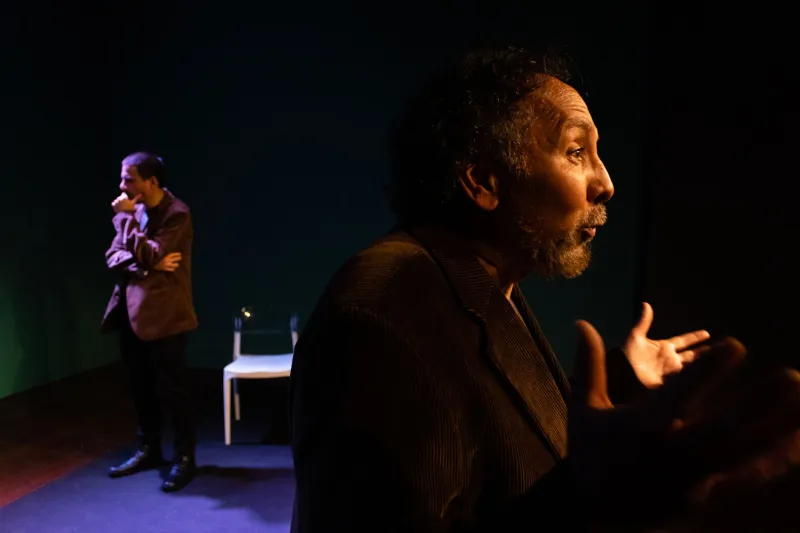
Consider a production of Death of a Salesman in which Willy Loman is portrayed by a Black actor. The tragedy of a man destroyed by an American Dream that was never designed to include him takes on an entirely different — and historically grounded — resonance. The text has not changed. The meaning has expanded.
Community theaters are uniquely positioned to lead in this area. Their casts reflect the actual demographic composition of their neighborhoods, and their audiences arrive with lived knowledge of what it means to see — or not see — themselves represented on stage.
"When our community looks up at that stage and sees people who look like them inhabiting these great roles, something shifts," observes one artistic director. "They stop being observers of someone else's story. They become participants in a story that belongs to everyone."
Maintaining Artistic Integrity Through the Process
The central challenge of any adaptation is the question of integrity. How much can a work be changed before it is no longer itself? There is no universal answer, but the most successful practitioners of this art share a common methodology: they begin with deep, rigorous engagement with the original.
Before a single setting is updated or a single role is recast, the best directors and dramaturges spend considerable time with the source material in its original form. They study its historical context, its original reception, its theatrical history. They understand what the playwright intended — and where the playwright's intentions were limited by the cultural assumptions of their era.
This foundational knowledge is what distinguishes thoughtful adaptation from careless revision. It is what allows a director to say, with confidence, "This change honors what the playwright was reaching for, even if it departs from what the playwright literally wrote."
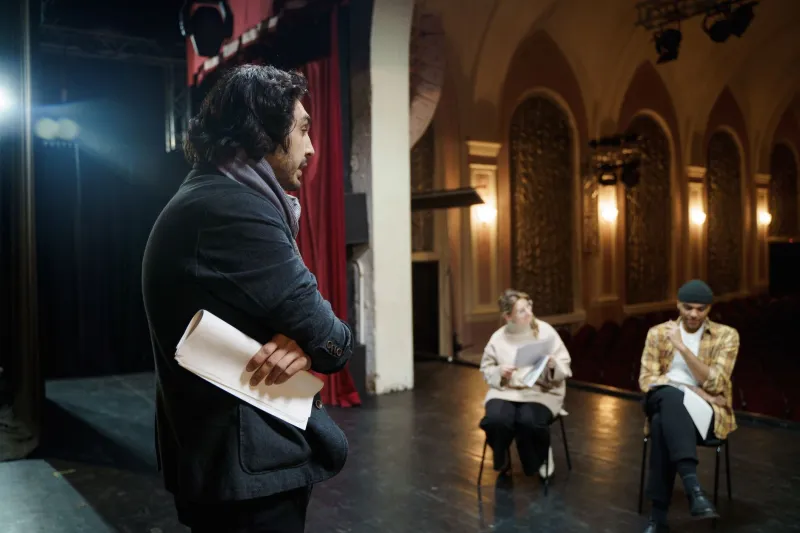
Workshop processes are also essential. Many community theaters now incorporate community readings, talkback sessions, and preview performances specifically designed to gather audience response before a production finalizes. This collaborative approach — treating the community not merely as consumers but as creative stakeholders — reflects the deepest values of the nonprofit theater model.
Why This Work Matters Beyond the Stage
The implications of this kind of theatrical reinvention extend well beyond the walls of any single playhouse. When a community theater adapts a classic for its specific audience, it is making a statement about who art belongs to. It is insisting that the great works of dramatic literature are not the exclusive property of elite institutions or culturally narrow interpretations. It is declaring, in the most practical terms possible, that these stories were written for everyone — and that everyone deserves to find themselves within them.
At Epic Theatre Center, this belief sits at the heart of everything we do. Theater has always been at its most powerful when it refuses to stand still — when it takes the accumulated wisdom of the past and puts it in direct conversation with the urgent realities of the present.
The classics endure not because they are frozen, but because they are alive. And living things, by their very nature, must grow.