Lights, Camera, Rehearsal: How the Theater Floor Is Producing Hollywood's Boldest New Directors

There is a moment familiar to anyone who has worked in community theater — the instant when weeks of rehearsal, technical preparation, and collaborative negotiation crystallize into a single, irreversible live performance. No second takes. No editorial safety net. Just human beings, language, and light. It is, by any measure, one of the most demanding creative environments imaginable. And increasingly, it is precisely that environment that is producing some of the sharpest directorial minds working in American film and television today.
As streaming platforms continue to expand their appetite for original content and the demand for skilled directors grows at an unprecedented rate, a quiet but significant pipeline has emerged — one that runs directly from the rehearsal rooms of community theaters to the writers' rooms and production offices of major studios. The skills cultivated on the live stage, it turns out, translate with remarkable fidelity to the world behind the camera.
The Rehearsal Room as Film School
Formal film education has long been celebrated as the gateway to a career in screen production. Yet veterans of both disciplines frequently note that the practical, human-centered training of theatrical work offers something film school curricula often cannot: the experience of leading people through uncertainty toward a shared creative vision, night after night, with no margin for error.
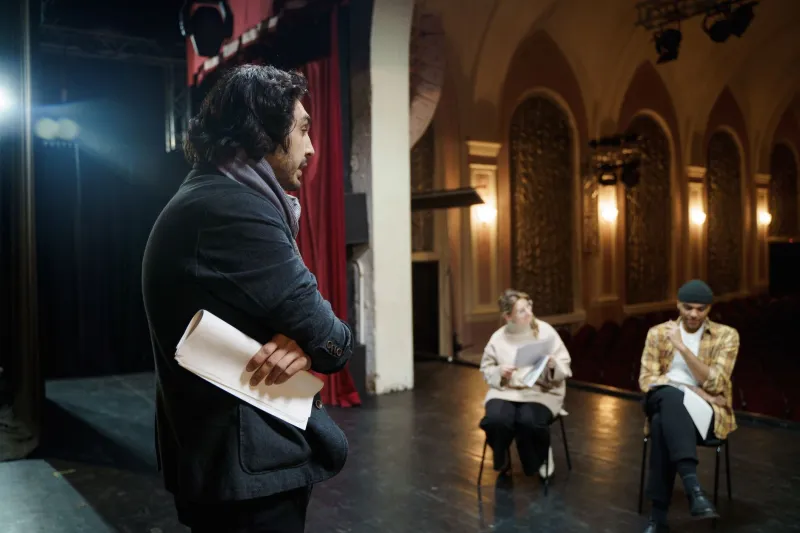
Directors who began their careers in community theater consistently describe the rehearsal process as an intensive laboratory in leadership. Blocking a scene for a live audience requires a director to think simultaneously about spatial storytelling, emotional authenticity, pacing, and the physical limitations of a specific venue — a cognitive multitasking that maps almost directly onto the demands of managing a film set.
Moreover, theater directors learn early that their role is fundamentally collaborative. Unlike the solitary mythology sometimes attached to auteur filmmaking, theatrical production is inherently a collective endeavor. The director must synthesize the contributions of actors, designers, stage managers, and technical crews into a coherent artistic statement. Those who have mastered that synthesis on a community stage frequently find that overseeing a film crew feels, in essential ways, familiar.
Storytelling Without a Safety Net
One of the most frequently cited advantages of a theater background among working film directors is a deepened relationship with narrative structure. Stage productions demand that a story be told entirely through performance and language — there are no digital effects to compensate for a weak scene, no score to manufacture emotion that the writing has not earned. Theatrical directors develop an acute sensitivity to the architecture of a story, an instinct for where a scene breathes and where it stalls.
This sensitivity translates powerfully to screen production. Directors who trained in theater tend to approach scripts with an analytical rigor rooted in the understanding that every scene must carry its own dramatic weight. They are accustomed to asking not merely what happens in a scene, but why it matters — what it reveals, what it withholds, and how it moves the audience one step closer to the story's emotional core.
For streaming content in particular, where audiences have the freedom to disengage at any moment, this kind of scene-level storytelling discipline is not merely useful — it is essential.
Working with Actors: A Distinct Advantage
Perhaps the most concrete advantage that theater-trained directors bring to screen production is their facility with performers. Stage direction is, at its heart, an extended conversation with actors — a sustained negotiation between a director's interpretive vision and a performer's embodied understanding of a character. Those who have spent years conducting that conversation in a live environment develop an almost intuitive fluency in the language of performance.
Film directors who lack theatrical experience frequently describe actor communication as one of the more challenging aspects of set management. Directing an actor in front of a camera requires the ability to offer specific, actionable guidance quickly and without disrupting the emotional state the performer has worked to achieve. Theater directors, accustomed to guiding actors through weeks of iterative refinement, tend to arrive on a film set with that language already internalized.
Producers and casting directors have noted this distinction as well. Directors with stage backgrounds are often described as unusually attentive to performance nuance — more likely to identify when an actor is technically correct but emotionally absent, and more skilled at finding the note that brings the two into alignment.
Community Theater as Creative Incubator
It would be a mistake to view community theater merely as a training ground — a provisional space that aspiring professionals pass through on their way to more prestigious venues. For many directors, the community theater environment offers something that even well-resourced professional productions cannot: creative freedom.
Because community theaters typically operate outside the commercial pressures that govern Broadway or major studio productions, they afford directors the latitude to experiment, to fail productively, and to develop an artistic identity on their own terms. A director who has staged an unconventional interpretation of a classical text for a local audience in Columbus, Ohio, or Boise, Idaho, has done something genuinely difficult — they have taken a creative risk in front of real people, without the cushion of institutional prestige or marketing infrastructure.
That experience of creative courage under modest circumstances is increasingly recognized within the industry as a marker of genuine directorial potential. It signals not only technical competence but the kind of artistic confidence that sustains a career across the inevitable uncertainties of professional production.
The Path Forward
For young people considering careers in film and television production, the message embedded in the trajectories of theater-trained directors is both practical and encouraging. The path to a successful career behind the camera does not begin exclusively in a film school lecture hall or on a professional set. It can begin — and often does — in the rehearsal room of a community theater, where the demands are real, the stakes are human, and the lessons are lasting.
At Epic Theatre Center, we recognize that the stage is not merely a destination but a point of departure — a space where the foundational skills of storytelling, collaboration, and creative leadership are first discovered and refined. The directors, producers, and cinematographers who carry those skills into the broader entertainment industry are not leaving theater behind. They are extending its reach, carrying the discipline and humanity of live performance into every frame they compose.
The curtain, it turns out, is not an ending. For those who learn to raise it well, it is the beginning of everything.