No Lead, No Limits: The Quiet Power of Ensemble Theater
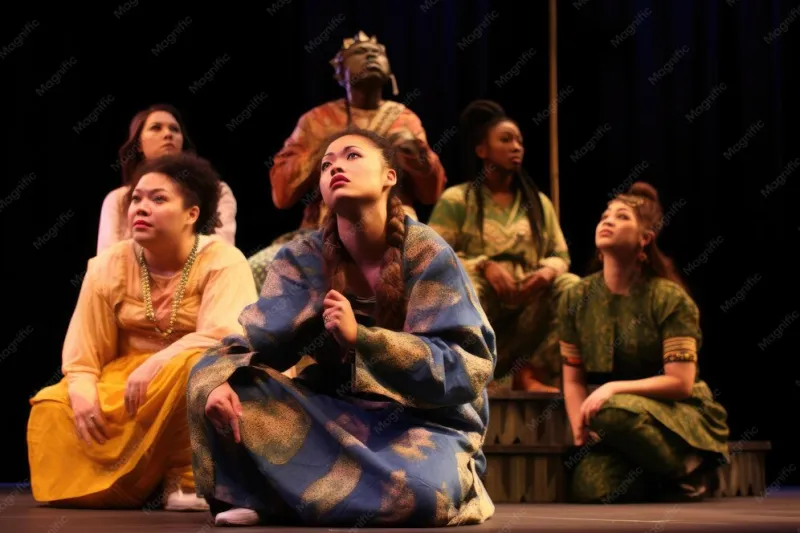
Photo: diverse theater ensemble cast on stage performing together, via img.freepik.com
There is a particular kind of silence that falls over an audience when a scene lands perfectly — not because one performer commanded the room, but because a dozen performers breathed together as a single organism. It is the silence of recognition, of feeling witnessed by something larger than a single voice. This is the promise and the achievement of ensemble-based theater, and it is a discipline that demands more from its practitioners than almost any other form of live performance.
At its core, ensemble theater asks a deceptively simple question: what happens when no one is the star?
What Ensemble Theater Actually Means
The term "ensemble" is frequently misused in theatrical circles. A production featuring several prominent actors is not, by definition, an ensemble piece. True ensemble work requires a foundational agreement among all company members — directors, performers, designers, and stage managers alike — that the story supersedes any individual contribution to it.
Chicago's Steppenwolf Theatre Company, founded in 1974 by a group of young artists committed to a shared artistic vision, remains one of the most studied examples of ensemble methodology in American theater. Its founding members, including Gary Sinise and John Malkovich, built their reputation not on star turns but on an almost ferocious commitment to collective storytelling. The company's ensemble model has since expanded to include dozens of artists who rotate through productions, lending each show a lived-in authenticity that is difficult to manufacture through conventional casting.
Houston's Alley Theatre operates under a similar philosophy. As one of the oldest resident theater companies in the United States, the Alley has long cultivated a core company of actors who develop professional shorthand over seasons and years together. The result is a kind of onstage fluency — an ability to respond to one another with the reflexive trust that only genuine familiarity produces.
The Personal Cost and Reward of True Collaboration
For performers trained in a system that prizes individual excellence — conservatory auditions, solo callbacks, headshots and resumes built around leading roles — stepping into a genuine ensemble can feel disorienting at first. The instinct to distinguish oneself, to find the moment that will be remembered, runs deep in American theatrical culture.
Actors who have committed to ensemble companies frequently describe a period of genuine discomfort before something shifts. The habit of self-promotion, so carefully cultivated through years of competitive auditioning, must be consciously set aside in favor of a different kind of attentiveness — one directed outward toward scene partners and collective rhythm rather than inward toward personal effect.
What emerges from that discomfort, however, is often described as transformative. Performers speak of discovering dimensions of their craft that solo-focused work never surfaced: the ability to truly listen rather than wait to speak, the skill of supporting a scene partner through physical presence alone, the discipline of remaining fully alive in a moment without drawing attention to that aliveness.
These are not merely aesthetic virtues. They are capacities that transfer directly into an actor's broader professional and personal life — qualities of attention, generosity, and restraint that prove valuable far beyond the stage.
Why Audiences Are Responding
The growing appetite for ensemble-driven productions among American theatergoers is not coincidental. It reflects something about the cultural moment in which we find ourselves — a hunger for experiences that feel genuinely communal rather than transactional.
Conventional star-driven theater, for all its pleasures, carries an implicit hierarchy. The audience arrives to witness a celebrated performer; the supporting cast exists to frame that performance. There is nothing inherently wrong with this structure, and it has produced some of the most memorable theatrical experiences in American history. But it also places the audience in a fundamentally passive relationship with the work. They are spectators at someone else's event.
Ensemble theater disrupts this arrangement. When no single performer dominates the stage, the audience's attention becomes more democratic — they are free to follow the story wherever it leads, to notice the actor in the corner whose quiet reaction changes the meaning of a scene, to feel the way a group of human beings in genuine communication creates something none of them could have produced alone.
This is, in the most literal sense, a communal experience. And in a cultural landscape increasingly defined by isolation and individualism, communal experiences carry unusual weight.
Building an Ensemble: Lessons for Smaller Companies
For community theater organizations across the country, the ensemble model offers both inspiration and practical guidance. Building a true ensemble does not require the institutional resources of a Steppenwolf or an Alley. It requires sustained commitment to a set of shared values — and the patience to let those values take root over time.
Companies interested in developing genuine ensemble practice might begin with extended rehearsal processes that prioritize group discovery over efficient staging. Movement workshops, improvisation exercises, and structured discussions about the production's themes can build the kind of mutual understanding that transforms a cast into a company.
Equally important is the cultivation of a company culture that explicitly values collective achievement. Recognition and celebration of ensemble moments — in post-show discussions, in company communications, in the way productions are marketed to the public — reinforces the values that make ensemble work possible.
At Epic Theatre Center, we believe that the stage is most powerful when it belongs to everyone on it. The ensemble effect — that ineffable quality that emerges when performers surrender individual ambition to shared purpose — is not a technique. It is a practice, a discipline, and ultimately a philosophy of what theater can be at its finest.