Truth in the Spotlight: Why Regional Theater Has Become America's Most Honest Stage

Photo by Photo by Product School on Unsplash on Unsplash
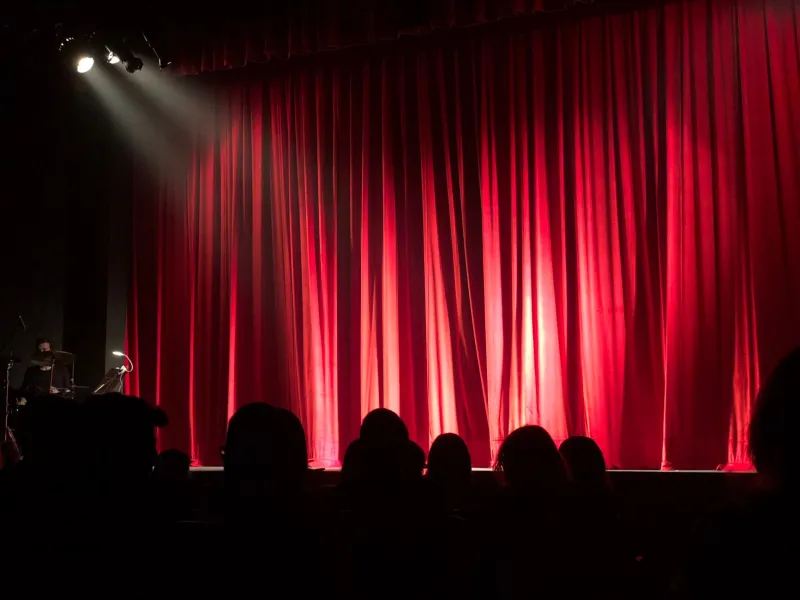
There is a particular kind of silence that falls over a theater audience when a story hits too close to home—when the words spoken from the stage feel less like performance and more like testimony. It is not the silence of discomfort, though it sometimes edges in that direction. It is the silence of recognition. Of a community seeing itself, perhaps for the first time, fully and honestly reflected in the work unfolding before them.
That silence is becoming more common in regional and community theaters across the United States. And it is no accident.
The Geography of Creative Risk
Broadway occupies a peculiar position in the American theatrical imagination. It is simultaneously the pinnacle of the art form and one of its most constrained environments. The financial stakes of a Broadway production—routinely measured in the millions of dollars—impose a conservatism that is difficult to avoid. Producers seeking a return on investment gravitate toward proven properties, recognizable titles, and narratives broad enough to appeal to the widest possible audience.
Regional and community theaters operate under an entirely different set of pressures. Freed from the obligation to recoup enormous capitalization, they are structurally positioned to take chances. A production that runs for four weekends in a 200-seat theater in Louisville or Albuquerque does not need to sell to a national audience. It needs to speak to the community it serves—and that community has stories that have waited a long time to be told.
"We don't have investors breathing down our necks asking whether the premise is marketable," explains one artistic director at a regional theater in the Pacific Northwest. "We have neighbors. And our neighbors have been asking us for years to put their lives on the stage."
Original Works and the Power of the Local Voice
One of the most significant shifts in regional theater programming over the past decade has been the growing emphasis on original work—plays and musicals developed in-house or commissioned from local and emerging playwrights, rather than licensed from the established canon.
This shift has produced some of the most vital theater being made in America today. In cities like Detroit, New Orleans, and Tucson, theater companies have staged world premiere productions examining redlining and housing discrimination, the opioid crisis in rural communities, the experiences of undocumented immigrants navigating daily life, and the complex legacies of Indigenous land dispossession. These are not abstract political statements. They are rigorously researched, deeply human stories drawn from the communities in which they are performed.
The effect on audiences is frequently profound. When a production draws its material from local history or lived experience, the relationship between performer and audience shifts. The fourth wall does not merely break—it dissolves. Theatergoers who might otherwise remain passive observers find themselves implicated, moved, and occasionally challenged in ways that commercially produced entertainment rarely achieves.
Centering Marginalized Voices
The push toward authentic storytelling in regional theater is inseparable from a broader reckoning with whose stories have historically been deemed worthy of the stage. For much of the twentieth century, the American theatrical canon—even at the regional level—defaulted to narratives centered on white, middle-class experience. The stories of Black, Latino, Asian American, Indigenous, LGBTQ+, and working-class communities were present at the margins, when they appeared at all.
That is changing with notable momentum. Theaters across the country are not only programming works by playwrights from historically underrepresented backgrounds but actively building infrastructure to support their development. New play festivals, playwright residencies, and community co-creation processes are generating a pipeline of work that reflects the full demographic complexity of American life.
The Penumbra Theatre in St. Paul, Minnesota, has long been recognized for its commitment to African American theatrical tradition. Companies like Teatro Luna in Chicago and East West Players in Los Angeles have similarly built reputations as essential homes for Latina and Asian American voices, respectively. But the movement is no longer confined to organizations with explicitly identity-centered missions. Mainstream regional theaters in markets large and small are expanding their programming philosophies, recognizing that authenticity is not a niche interest—it is what audiences increasingly demand.
How Audiences Are Responding
The assumption that audiences prefer comfortable, familiar narratives is being tested and, in many cases, disproven. Regional theaters that have committed to more truthful and complex programming report that audiences are not retreating—they are leaning in.
Post-show discussions have become one of the most reliable indicators of audience engagement. Productions that tackle difficult subject matter often generate conversations that extend well beyond the lobby and into the community at large. Social media amplifies these conversations further, transforming a single weekend of performances into an ongoing community dialogue.
There is also evidence that authentic storytelling is broadening the audience for live theater rather than narrowing it. When communities that have historically felt excluded from theatrical culture see their own experiences on stage, they come—and they bring others. New audiences, often younger and more demographically diverse than traditional theater subscriber bases, are discovering live performance through productions that speak directly to their lives.
The Responsibility of the Regional Stage
With this creative freedom comes responsibility. Authentic storytelling requires more than good intentions. It demands rigorous research, genuine community consultation, and a commitment to artistic integrity that does not reduce complex human experiences to convenient dramatic arcs. Regional theaters that approach this work thoughtfully—that build relationships with the communities whose stories they seek to tell, that hire artists with lived proximity to the subject matter, and that create space for ongoing dialogue—are producing theater that matters in ways that extend far beyond the run of a single production.
The regional stage has always been the place where American theater finds its conscience. In an era of increasing social complexity and cultural fragmentation, that role has never been more important—or more richly fulfilled.